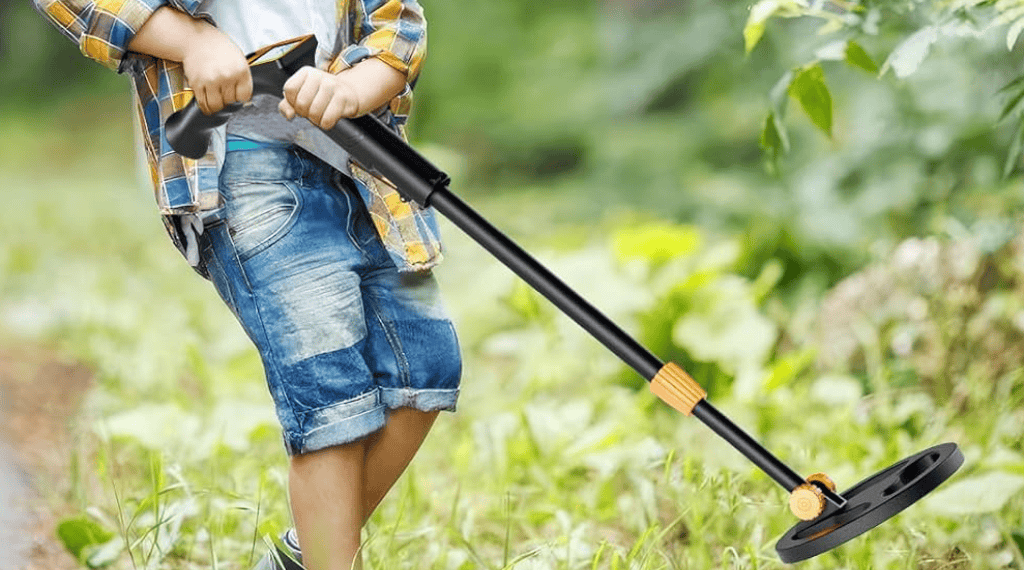
Metal Detecting for Children:
A Parent’s Beginner Guide
Metal detecting can be a wonderful hobby for children.
It gets them outdoors, encourages curiosity about history and gives them the excitement of never quite knowing what the next signal might reveal.
It can also become an enjoyable activity for parents, grandparents and children to share together.
At Metal Searchers, we have more than 30 years of detecting experience, and we believe the key to introducing children to metal detecting is simple:
Keep it safe, keep it straightforward and make it fun.
A child does not need an expensive professional detector or complicated settings to enjoy the hobby.
They need equipment that is comfortable to use, somewhere suitable to search and plenty of encouragement.
Is Metal Detecting Suitable for Children?
Yes.
Metal detecting can be enjoyed by children of many ages, provided the activity is appropriately supervised and the equipment suits the child.
It can encourage:
- Outdoor activity
- Patience
- Concentration
- Curiosity
- Historical interest
- Problem solving
- Understanding of the environment
- Family time
Perhaps most importantly, finding even an ordinary modern coin can feel like genuine treasure to a child.
What Age Can a Child Start Metal Detecting?
There is no single correct age.
The most important considerations are whether the child can:
- Comfortably hold the detector
- Understand simple instructions
- Search safely
- Remain interested
- Avoid hazardous objects
- Follow basic countryside rules
A younger child might detect successfully for only 15 or 20 minutes before losing interest.
That is perfectly normal.
The aim should be enjoyment rather than completing a long detecting session.
Choose a Detector That Fits the Child
One of the biggest mistakes when buying a detector for a child is choosing something that is physically too large or heavy.
A detector may have excellent specifications but be completely unsuitable if the child struggles to swing it.
Look for:
- Low weight
- Adjustable shaft length
- Small or medium search coil
- Simple controls
- Clear display
- Straightforward audio
- Good balance
- Comfortable armrest
Weight and balance are particularly important.
A poorly balanced detector can become tiring surprisingly quickly.
Don't Buy on Features Alone
Children generally do not need:
- Complex tone profiles
- Advanced Ferrous Limits
- Numerous search modes
- Extensive manual adjustments
- Professional-level configuration
Those features can be useful later.
For a first detector, we generally favour something that allows the child to:
- Switch it on.
- Select a suitable mode.
- Adjust sensitivity if necessary.
- Start detecting.
The fewer barriers between the child and finding targets, the better.
Children's Detector or Lightweight Adult Detector?
There are two basic options.
Dedicated Children's Detector
These are designed specifically for younger users.
Advantages can include:
- Very low weight
- Short shaft
- Simple controls
- Lower cost
The disadvantage is that some inexpensive children's detectors may have limited performance and can quickly be outgrown.
Lightweight Full Detector
For older children, a compact adult detector may offer better long-term value.
Advantages can include:
- Better detection performance
- More useful discrimination
- Greater depth
- Replaceable coils
- Longer useful life
The best choice depends on the child's age, size, enthusiasm and budget.
Consider the Search Coil Size
A large search coil may look impressive but can make a detector much harder for a child to use.
A smaller coil can provide:
- Lower weight
- Better balance
- Easier pinpointing
- Improved manoeuvrability
- Good target separation
For younger children, ease of handling is usually more valuable than maximum depth.
Start Somewhere Easy
Do not make a child's first detecting session a six-hour search across difficult ploughed farmland.
Choose somewhere straightforward.
Good introductory locations, where detecting is permitted, might include:
- A private garden
- A test garden
- Dry beach sand
- A simple pasture permission
- An organised family-friendly detecting event
The child should be able to find targets relatively regularly.
Long periods without a signal can quickly make the hobby feel boring.
A Garden Is an Excellent Starting Point
Your own garden can be one of the safest places to introduce a child to detecting, provided you know where underground utilities are located and digging is appropriate.
You can even hide a few known targets.
For example:
- 1p coin
- 2p coin
- £1 coin
- Toy metal token
- Aluminium object
This gives the child immediate success while learning how the detector works.
For a more permanent setup, see our guide to building a metal detector test garden.
Turn the First Session Into a Treasure Hunt
Children often respond better to a treasure hunt than a technical detecting lesson.
Hide several low-value coins or tokens at shallow depths or beneath loose soil.
Give clues or create a simple map.
This teaches:
- Coil control
- Listening for signals
- Pinpointing
- Recovery
without making the session feel like training.
Keep the First Session Short
A child's attention span is usually much shorter than that of an experienced detectorist.
Twenty minutes of enthusiastic detecting is better than two hours ending in frustration.
Stop while the child is still enjoying it.
You can always return another day.
Teach Correct Coil Technique Early
Good habits are easier to learn than bad habits are to correct.
Show the child how to:
- Keep the coil close to the ground
- Keep it reasonably level
- Sweep slowly
- Overlap each sweep
- Avoid hitting obstacles
You do not need to explain electromagnetic theory.
Simply demonstrate the movement.
Avoid the Pendulum Swing
Children often naturally swing a detector like a pendulum.
This raises the search coil at each side of the sweep.
Show them how to keep the coil at approximately the same height across the entire movement.
You can make it into a game:
“Try to keep the coil skating across the top of the grass.”
Don't Start With Maximum Sensitivity
A detector constantly producing false signals is confusing for a beginner.
Use a moderate, stable sensitivity setting.
The child should hear:
signal → investigate target
rather than:
beep → beep → chirp → false signal → beep → confusion.
Stability is much more important than trying to achieve maximum depth.
Use a Simple Search Mode
Start with a straightforward general-purpose search mode.
Avoid making constant changes to:
- Recovery Speed
- Ground Balance
- Tone breaks
- Frequency
- Discrimination
- Advanced iron settings
The adult can handle any necessary technical configuration before handing over the detector.
Teach Them to Listen
Encourage the child to listen to the target before immediately looking at the display.
Ask:
“Does it sound the same every time?”
Then sweep from another direction.
This starts developing good detecting habits without becoming overly technical.
Target ID Can Make Detecting Fun
Children often enjoy watching Target ID numbers.
You can turn this into a guessing game:
“What do you think it is?”
But explain that the display cannot tell them exactly what is underground.
A target showing a particular number might be:
- Coin
- Foil
- Pull tab
- Aluminium
- Another metallic object
The only way to know for certain is to investigate it.
Expect Plenty of Rubbish
Children should understand early that not every signal is treasure.
They may find:
- Bottle caps
- Foil
- Ring pulls
- Nails
- Aluminium
- Wire
Make this part of the experience rather than a disappointment.
You could even have two compartments in the finds pouch:
TREASURE
and
RUBBISH
At the end, count how much rubbish was removed from the ground.
Make Rubbish Removal Positive
Explain that removing sharp or unwanted metal helps leave the location cleaner.
This teaches responsible detecting from the beginning.
A rusty nail may not be an exciting find, but removing it from an area used by people or animals is still worthwhile.
Use Gloves
We recommend gloves for children when retrieving targets.
Metal detecting can uncover:
- Sharp metal
- Broken aluminium
- Rusty iron
- Glass near targets
- Fishing hooks
- Other rubbish
Children should not blindly reach into a hole.
An adult should inspect questionable targets.
Adults Should Handle Suspicious Finds
Teach the child one simple rule:
If you don't know what it is, don't touch it.
Metal detecting can occasionally uncover:
- Ammunition
- Military objects
- Sharp metal
- Needles
- Dangerous rubbish
If anything looks unusual or potentially dangerous, the child should step away and tell the supervising adult.
Never Handle Suspected Ordnance
If a find resembles:
- Ammunition
- Grenade
- Shell
- Bomb
- Other military ordnance
do not move or clean it.
Move to a safe distance and contact the appropriate authorities.
The NCMD similarly advises detectorists to stop digging and seek expert help where ammunition, bombs, human remains or other unusual finds are encountered.
Be Careful With Small Finds
Young children may naturally put small objects in their mouths.
Metal detecting routinely produces tiny objects such as:
- Coins
- Pellets
- Lead fragments
- Buttons
- Small metal fittings
These should be kept safely away from very young children.
Small objects, magnets and button batteries can present serious ingestion hazards to children, so parents should supervise finds carefully.
What About Lead Finds?
Lead is very common on farmland.
Children should avoid unnecessary handling of corroded lead objects.
An adult should deal with them where possible.
After detecting, wash hands thoroughly before:
- Eating
- Drinking
- Touching the face
Gloves provide a useful additional precaution.
Choose Safe Digging Tools
A full-size sharp digging spade may not be appropriate for a young child.
Depending on age, use:
- Small trowel
- Child-appropriate digging tool
- Plastic scoop
- Sand scoop
The adult can carry out deeper recovery.
The child can still use the pinpointer and locate the final target.
A Pinpointer Is Excellent for Children
A pinpointer can make target recovery much easier and more enjoyable.
Once the adult has opened the hole, allow the child to use the pinpointer to find the object.
This provides an immediate:
beep → target → discovery
experience.
For children, that can be one of the most enjoyable parts of detecting.
Beach Detecting Can Be Excellent for Families
A beach can be a very good place for children to learn, provided detecting is permitted.
Dry sand is particularly convenient because:
- Digging is easy
- Holes are easy to refill
- Targets can be relatively frequent
- No grass plugs are required
- Sand scoops work well
Always check who owns or manages the beach before detecting.
Our Metal Detecting on Cornwall Beaches guide explains this in more detail for Cornwall.
Beaches Have Their Own Hazards
Supervise children carefully around:
- Incoming tides
- Deep water
- Cliffs
- Rock falls
- Strong currents
- Slippery rocks
- Fishing hooks
- Broken glass
- Sharp metal
Metal detecting should never distract from normal beach safety.
Check the Tide
If detecting below the high-water line, know what the tide is doing.
Do not allow a child to become so absorbed in detecting that neither of you notices the sea returning.
Keep a safe route back from the beach at all times.
Farmland Can Also Be Excellent
A suitable pasture permission can be enjoyable for older children.
However, explain farm rules first.
Children should understand:
- Do not chase animals.
- Do not climb on machinery.
- Do not touch electric fences.
- Leave gates as instructed.
- Do not enter crops.
- Stay with the supervising adult.
The NCMD's beginner guidance similarly stresses landowner permission, careful digging, correct treatment of gates, crops, animals and wildlife.
Get Permission
Children need permission just as adults do.
The supervising adult should establish that detecting is allowed.
Do not assume permission simply because the location is:
- Public
- A park
- A footpath
- A beach
- Woodland
- Common land
The NCMD states that landowner permission is required before detecting and that public access itself is not enough.
NCMD Membership for Children
The NCMD currently allows children under 16 to be added free to an adult member's account.
Under-16 members must be accompanied by an adult NCMD member while detecting.
This may be worth considering for families who intend to detect regularly.
Always check the current NCMD membership conditions because arrangements can change.
Teach Them to Fill Every Hole
This is one habit worth establishing from the first day.
Make filling the hole part of recovering the target.
The sequence becomes:
Detect → pinpoint → dig → recover → refill
rather than stopping at:
Detect → dig → recover.
A responsible detectorist leaves the location in good condition.
Keep Finds in a Pouch
Children naturally want to hold whatever they have just discovered.
A finds pouch prevents:
- Coins being lost again
- Sharp objects being carried by hand
- Muddy finds entering pockets
- Rubbish being left behind
Use separate sections for interesting finds and rubbish if possible.
Don't Clean Old Finds Immediately
If a child finds an old coin, the natural reaction will probably be:
“Let's clean it!”
Teach them not to scrub old objects automatically.
Cleaning can damage:
- Patina
- Detail
- Plating
- Historical surfaces
Instead, photograph the object and identify it first.
This also turns the discovery into a historical research exercise.
Encourage Children to Research Their Finds
This is where metal detecting can become educational.
A child might find a coin and research:
- Who was monarch
- When it was made
- How much it was worth
- What people bought with it
- What was happening locally at the time
A simple coin can become a route into history.
Keep a Finds Book
Children may enjoy creating a detecting diary.
Record:
- Date
- Location
- Find
- Photograph
- Approximate age
- Detector used
For example:
Date: 10 September
Place: Grandad's garden
Find: 1967 penny
Depth: 6 cm
Detector: Nokta Mini Hoard
Best find of the day: Penny
Over time, this becomes a personal record of their detecting adventures.
Make a Finds Display
Safe, ordinary finds can be stored in:
- Coin folders
- Display boxes
- Labelled trays
- Scrapbooks
Add labels containing:
- Object
- Date
- Find location
- Approximate age
This encourages children to think about the history rather than simply the financial value.
Don't Focus on Valuable Finds
Avoid creating the expectation that every outing will produce gold or valuable coins.
Most detecting sessions won't.
Celebrate:
- First coin
- Oldest coin
- First button
- Strangest object
- Biggest object
- Most rubbish removed
The aim is discovery rather than profit.
Set Small Challenges
Challenges make detecting more engaging.
Examples include:
Find three different metals
Find a coin
Find something older than Mum or Dad
Find five pieces of rubbish
Identify three Target ID numbers
Find a target using only the audio
This keeps the child interested while teaching useful skills.
Don't Detect for Too Long
Children can become physically tired even when they are still enthusiastic.
Watch for:
- Poor coil control
- Dragging detector
- Frustration
- Loss of concentration
That usually means it is time to stop.
Finishing on a positive note encourages them to want to go again.
Suitable Beginner Equipment
A simple children's detecting kit might include:
| Equipment | Importance |
|---|---|
| Lightweight metal detector | Essential |
| Small search coil | Very useful |
| Finds pouch | Essential |
| Gloves | Strongly recommended |
| Pinpointer | Very useful |
| Small digging tool | Age dependent |
| Headphones | Optional |
| Water | Essential on longer trips |
| Suitable footwear | Essential |
| Weather clothing | As required |
Headphones for Children
Headphones can make weak signals easier to hear but should be used cautiously.
Keep the volume low enough to protect hearing and ensure the child can still remain aware of the surrounding environment.
On beaches and public locations, situational awareness is important.
Choosing a Detector for a Child
We suggest prioritising the following characteristics:
Weight
This should be near the top of the list.
Shaft Length
Make sure it can be adjusted short enough.
Simplicity
A clear interface is preferable.
Search Coil
A small lightweight coil is often easier.
Durability
Children's equipment will inevitably receive knocks.
Waterproofing
Particularly useful for beach use.
Headphone Compatibility
Helpful but not essential.
Price
Don't overspend before you know whether the child enjoys the hobby.
Don't Buy Too Cheaply Either
Extremely inexpensive toy-like detectors can cause frustration if they:
- Produce constant false signals
- Have poor depth
- Cannot discriminate effectively
- Are mechanically weak
- Behave inconsistently
A child may decide they dislike metal detecting when the real problem is poor equipment.
Aim for a genuine entry-level detector rather than a toy if the budget permits.
Let the Child Choose the Detector
Where practical, involve them in the decision.
Let them consider:
- Appearance
- Weight
- Display
- Controls
- Comfort
A detector they feel belongs to them can encourage greater enthusiasm.
A Simple First Detecting Session
We suggest:
1. Choose a safe location
Your own garden or suitable permitted beach is ideal.
2. Explain three rules
Stay with me.
Don't touch anything strange.
Fill every hole.
3. Demonstrate the detector
Keep the explanation short.
4. Place a few known targets
Give them early success.
5. Let them detect
Avoid constantly correcting every movement.
6. Help with digging
Particularly with difficult or sharp targets.
7. Examine the finds together
Even ordinary objects can be interesting.
8. Stop before they become tired
Leave them wanting another detecting trip.
Frequently Asked Questions
Is metal detecting safe for children?
Yes, with suitable adult supervision, appropriate equipment and sensible precautions around digging, sharp objects, water, livestock and potentially hazardous finds.
What age can children start metal detecting?
There is no fixed age. The child should be physically able to handle the detector and capable of following basic safety instructions.
What is the best metal detector for a child?
Look for a lightweight detector with a short adjustable shaft, simple controls and a suitably small search coil.
Does a child need an expensive metal detector?
No. Simplicity, weight and comfort are generally more important than advanced features.
Can children metal detect on beaches?
Yes, where detecting is permitted, but normal beach safety and local detecting rules still apply.
Does a child need permission to metal detect?
Yes. The same landowner and site restrictions apply regardless of the detectorist's age.
Can children join the NCMD?
The NCMD currently provides free under-16 membership when children are added to an adult member's account. They must be accompanied by an adult NCMD member while detecting.
Should children use a pinpointer?
A pinpointer can be particularly useful because it makes locating the final target much easier and more enjoyable.
Should a child clean old coins?
Not automatically. Old or potentially important finds should be identified before aggressive cleaning.
Is metal detecting educational?
It certainly can be. Finds can encourage children to research history, coins, geography, archaeology and local communities.
Final Thoughts
Metal detecting can give children something increasingly valuable:
a reason to explore the outdoors with curiosity.
They learn patience.
They learn that history exists beneath the places they walk every day.
They learn that not every signal produces treasure.
And they experience the excitement of discovering something themselves.
The secret is not to make their first detecting trip too technical.
Give them a lightweight detector.
Choose somewhere safe.
Find a few targets.
Celebrate the rubbish as well as the coins.
Teach responsible habits from the beginning.
Most importantly, let them enjoy themselves.
A child who finds an ordinary £1 coin on their first outing may remember the experience far longer than an adult remembers finding something worth considerably more.
That excitement is where a lifelong interest in metal detecting can begin.
Happy family detecting!
Looking for a child's first metal detector?
Browse our selection of lightweight metal detectors for children, including models designed specifically for younger detectorists.